
Ken Paxton’s Trump Problem: Leaked Audio Puts Texas Senate Race Under Pressure
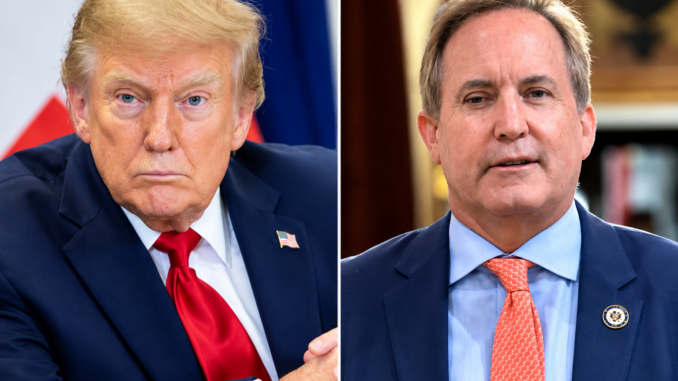
Ken Paxton is facing a new political test after leaked audio appeared to show him saying Donald Trump’s Texas midterm convention hurt Republican candidates’ poll numbers.
The remark creates an awkward moment for Paxton, one of Trump’s strongest allies, as he campaigns for a U.S. Senate seat.
At a private gathering with conservative donors and lobbyists, Paxton reportedly said: “When we did that convention, it dropped our numbers.
Everybody’s numbers dropped. Right now, yeah, not good.” The New York Times obtained and published the recording. Other outlets reported the same exchange, while noting that the audio has not been independently verified by every organization.
The controversy is not only about one sentence. It raises a larger question: Can Paxton defend Trump in public while privately admitting that a Trump-centered event may have weakened his own campaign?
What Ken Paxton reportedly said
The recording came from a private fundraiser held after a Republican midterm convention in Dallas. The event featured Trump and placed heavy attention on Texas Republicans, including Paxton’s Senate campaign.
According to reports, a person at the gathering asked whether Trump had become “a drag.” Paxton responded that the convention had caused Republican numbers to fall.
The comment quickly became national news because Paxton has built his political identity around loyalty to Trump. He has repeatedly supported Trump’s legal and political fights and has presented himself as a reliable conservative defender.
Trump, however, sought to distance himself from the controversy. When asked about the audio, he said he had not heard it. Paxton’s spokesperson, Nick Maddux, called the report “manipulated nonsense” and pointed to an internal campaign poll showing Paxton ahead of Democratic opponent James Talarico by three points.
Public polling reported by news organizations has offered a less comfortable picture. Some surveys have shown Paxton trailing Talarico, while his campaign insists that its private numbers are stronger.
That disagreement matters. In a close race, even a small shift in public confidence can affect donors, volunteers and undecided voters.
Why the convention became a liability
A midterm convention is normally meant to energize a party, sharpen its message and help candidates campaign as a team. But the Dallas gathering was unusual because it focused heavily on Trump at a time when Republican candidates were trying to define their own campaigns.
The event created a familiar political tension. Trump remains a powerful force among Republican voters, yet candidates must also appeal to voters who may be tired of constant national conflict.
For Paxton, that balance is especially difficult. His political brand depends on cultural confrontation, legal battles and close alignment with Trump. If the convention hurt Republican candidates, as he reportedly suggested, it may have exposed the limits of that strategy outside the party’s most loyal base.
In simple terms, the event may have made the race feel more like a referendum on Trump than a choice between Paxton and Talarico.
Ken Paxton’s long political journey
Paxton, 63, was born on December 23, 1962, in Minot, North Dakota. His family later settled in Texas, where he attended Baylor University and earned law and business degrees.
He entered politics as a Texas state representative and later served in the state Senate. Voters elected him attorney general in 2014, and he became one of the country’s most combative state attorneys general.
His office sued the federal government repeatedly, especially during Democratic administrations. Supporters praised him for challenging Washington and defending conservative policies. Critics accused him of turning the attorney general’s office into a national political platform.
The leaked recording now adds another layer to that history: a candidate publicly committed to Trump but privately worried about the political cost of Trump’s influence.
Impeachment and legal allegations
Paxton’s political career has survived serious legal and ethical challenges.
In 2015, he was indicted on state securities-fraud charges connected to allegations that he promoted a technology company without properly disclosing compensation. Paxton denied wrongdoing. The case lasted nearly a decade and ended after he completed a pretrial diversion agreement that included restitution, community service and legal education. The charges were later dismissed.
In 2023, the Texas House impeached Paxton on 20 articles. The allegations included misuse of official power, abuse of public resources and claims that he used his office to assist Austin real-estate developer Nate Paul.
The Texas Senate later tried Paxton on 16 articles. The accusations included helping Paul obtain confidential information, interfering in legal matters and accepting benefits such as home improvements. Paxton pleaded not guilty and denied the allegations. The Senate acquitted him on every article, allowing him to remain attorney general.
The impeachment did not end the debate over Paxton. Instead, it deepened the divide around him.
His supporters viewed the case as a partisan attack.
His critics saw it as evidence of a pattern of abuse of power.
Republican lawmakers themselves were divided, revealing tensions inside the Texas GOP.
That history matters in a Senate campaign because voters are not judging only a new speech or one leaked recording. They are weighing a long record of conflict, survival and controversy.
Ken Paxton’s personal life
Paxton’s family life has also drawn public attention.
He married Angela Paxton in 1986 after they met at Baylor University. They have four children and several grandchildren. Angela Paxton became a Texas state senator and spent more than two decades working in education as a teacher and guidance counselor.
In July 2025, Angela Paxton filed for divorce after 38 years of marriage, citing “biblical grounds.” The couple’s separation means Ken Paxton is not currently best described as a married man, although the legal status of the divorce may depend on court proceedings and later filings.
For a politician who has often spoken in faith-based and conservative terms, the breakdown of his marriage carries an emotional and political weight that goes beyond campaign headlines.
What religion is Ken Paxton?
Paxton has publicly identified with Christianity and has been associated with Prestonwood Baptist Church in Plano. His religious identity is part of the broader conservative coalition that has supported his career.
Still, faith is personal, and political coverage should avoid treating church membership as proof of private beliefs or character. The more meaningful question is how a candidate’s public values shape his choices in office.
What happened to Ken Paxton’s eye?
Paxton has a visible difference between his eyes because of an injury he suffered when he was young. Doctors eventually removed the lens from his right eye, leaving the eyes different colors and causing the right eyelid to droop.
The detail is often mentioned in profiles, but it is not central to his public record. It is one of the personal facts that makes a familiar political figure more human without defining him.
Ken Paxton’s net worth
There is no single universally accepted figure for Ken Paxton’s net worth. Estimates published online can differ widely because politicians’ assets, debts, property holdings and investments are reported through financial disclosures rather than a simple public balance sheet.
Readers should treat online estimates with caution. A reliable figure would require reviewing the most recent official financial disclosure and separating Paxton’s own assets from jointly held or family property.
What the leaked audio could mean
The immediate danger is not necessarily that Paxton criticized the convention. Political candidates often discuss polling privately. The greater risk is that the recording reinforces doubts about his judgment and message.
Voters may ask:
Does Paxton believe Trump is helping or hurting the Republican ticket?
Was he speaking honestly to donors but avoiding the same honesty with voters?
Can he run an independent Senate campaign while remaining closely tied to Trump?
Will the controversy distract from state issues such as border security, crime and the economy?
Paxton’s campaign is likely to argue that the recording was distorted and that internal polling shows momentum. His opponents will use it to portray him as politically anxious and caught between loyalty and reality.
That is the human drama at the center of this story. Paxton has spent years presenting himself as a fighter who does not retreat under pressure. Now he must explain a private moment in which he appeared to acknowledge that the most powerful figure in his party may have made his path harder.
The bigger Texas story
Texas remains deeply Republican, but that does not make every Republican race predictable. Candidates still need to manage changing suburbs, younger voters, independent voters and fatigue with political drama.
Paxton’s challenge is particularly sharp because his strengths and weaknesses come from the same source. His closeness to Trump gives him access to the party’s most energized voters. It also ties his campaign to Trump’s popularity, controversies and public image.
The leaked audio will not decide the Senate race by itself. But it may become a symbol of the campaign: a race about loyalty, trust and whether Texas voters want another national political warrior—or a different kind of Republican voice in Washington.
Sources
The New York Times, “Ken Paxton, G.O.P. Nominee in Texas, Privately Said Trump’s Convention Hurt Him.”
Texas Public Radio, report on Paxton’s leaked audio and polling concerns.
CNN, analysis of Trump’s Texas midterm convention and Paxton’s remarks.
CBS News, report on Trump’s response and the Paxton campaign’s denial.
Texas Senate, official record of Paxton’s impeachment trial and acquittal.
Associated Press and Reuters, reports on Paxton’s securities-fraud case and its resolution.
Britannica, biographical information about Ken Paxton, his family and eye injury.
Texas attorney general’s office, biographical information and church affiliation.


Leave a Reply