
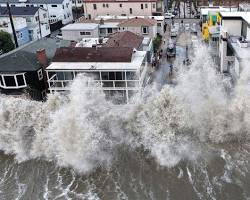
California Braces for a “Super” El Niño: What 2026 Actually Means for You
Steven Cline has watched the Russian River flood his Guerneville neighborhood almost every year. He knows the rhythm by heart. But this year feels different.
“Comes in fast and then it drains by the tides,” Cline described the flooding that takes place in his neighborhood nearly every year. Now he’s gearing up for something bigger than the usual soak.
He’s not alone. Across California, officials are sounding alarms usually reserved for hurricanes, not winter storms. On September 21, 2026, Governor Gavin Newsom made it official: a statewide state of emergency, weeks before the rain has even started falling.
So what’s actually happening? Let’s break it down.
What Is El Niño, Really?
Strip away the jargon, and El Niño is simple. It’s a natural climate pattern where the ocean surface in the tropical Pacific warms up more than usual. That warmth doesn’t stay put — it reshapes wind patterns, storm tracks, and rainfall across the entire planet.
California’s own governor’s office put it plainly: El Niño brings warmer-than-average ocean temperatures to the tropical eastern Pacific, which can shift weather patterns toward wetter, more intense winters for California.
Here’s the twist for 2026: this isn’t your average El Niño. Climate change appears to be turbocharging it. A study published in the journal Science found El Niño events are now more than 36% stronger than they were before the industrial era, with that trend accelerating over the last 40 years as the planet warms.
Translate that into human terms: the storms of your childhood aren’t the storms coming this winter.
Is 2026 an El Niño or La Niña Year?
Straight answer: El Niño, and a strong one. NOAA’s Climate Prediction Center has been tracking it climb all summer, and by mid-September, the agency confirmed El Niño conditions were already present, with equatorial sea surface temperatures above average across the east-central and eastern Pacific Ocean.
The forecasters aren’t hedging much either. As of late September, there’s a greater than 90% chance of a very strong event during the Northern Hemisphere fall and winter of 2026-27.
How Strong Could This “Super El Niño” Get?
“Super El Niño” isn’t marketing hype — it’s a real category, reserved for the rare events that blow past every historical benchmark. And this one is flirting with the record books.
By August, water temperatures in the key monitoring zone were running 2.07 degrees above average — hotter at this point in the year than the famous Super El Niño events of 2015, 1997, 1991, and 1982. Some computer models suggest this could become the strongest El Niño event since record-keeping began in 1950.
The World Meteorological Organization isn’t mincing words either. WMO chief Celeste Saulo warned the world is entering the “danger zone of extreme weather” and said that if current trends hold, this El Niño may be stronger than anything since monitoring began
Quick facts on El Niño 2026’s trajectory:
- El Niño Advisory issued by NOAA, upgraded from a Watch in June 2026
- Probability it persists through winter 2026-27: effectively certain
- Expected peak: late fall into early winter, with impacts stretching into spring 2027
- Chance of reaching historic, record-breaking intensity: roughly 7 in 10 for the October–December window
El Niño 2026 in California: Why Newsom Hit the Panic Button Early
Emergency declarations usually come after disaster strikes. This one came before a single storm made landfall — and that’s the point.
“I find that conditions of extreme peril to the safety of persons and property exist due to the developing El Niño event,” the declaration states. It’s not an announcement that disaster has arrived. It’s a head start.
The move frees up state agencies to move fast: staging equipment, protecting infrastructure, and helping vulnerable communities get ready before the sky opens up. Newsom framed it as a matter of community, not just bureaucracy: “California is strongest when we look out for one another,” he said in a statement announcing the proclamation.
On the ground, crews aren’t waiting around. In Sonoma County, Cal Fire teams have been clearing trees along flood-prone roads and prepping sandbag stations, while the California National Guard is positioning high-water rescue vehicles for the season ahead.
Santa Rosa Fire Department’s Paul Lowenthal summed up the mindset shift officials want from residents: know your evacuation plan, build a go-bag, and be prepared for the potential of outages and being ready to evacuate at a moment’s notice.
The Coastal Danger Nobody’s Talking About Enough
Rain and mountain snow get the headlines. But there’s a quieter threat stacking the deck against Southern California this winter: king tides.
Laura Hollender, deputy director at California’s Department of Water Resources, flagged that the king tides scheduled for November and December could make conditions along the Southern California coast especially dangerous.
When El Niño storm surge collides with the year’s highest natural tides, coastal flooding gets amplified — homes, roads, and sea walls take the hit together, not separately.
What Does El Niño Mean for California’s Marine Life?
It’s not just people who feel El Niño’s effects. The ocean itself gets thrown off balance.
Normally, cold, nutrient-rich water rises up from the deep along California’s coast — a process called upwelling.
El Niño interrupts it. Without that nutrient boost, phytoplankton populations crash, and the entire food chain above them feels it, from fish stocks to the sea lions and seabirds that depend on them.
Beyond California: Where Else Is El Niño Hitting Hard in 2026?
This isn’t a California story alone — it’s a planetary one.
- Southeast Asia: Wildfires are already torching farmland and peatlands in Indonesia, sending toxic haze across the region
- East Africa (including Kenya): Forecasters expect above-average rainfall starting late September through December, raising flood risk across nearly all 47 counties
- Central America and Southern Africa: Expected to face the most severe food security impacts
- Australia and parts of Southern Asia: Typically trend drier during El Niño years
- Malaysia: The prime minister has directed the Ministry of Agriculture to prepare mitigation plans, with impacts expected to peak in November
Is El Niño Coming to Kenya in 2026?
Yes — and it’s already underway. Kenya’s Meteorological Department has told residents to expect the shift, with an 81% chance the event will be very strong and a 97% chance it persists into early 2027.
Rainfall is expected to increase from late September through December, with the wettest conditions concentrated in Central Kenya, the Rift Valley, and the Lake Victoria basin.
For a country still recovering from the destructive 2023–2024 El Niño floods, that forecast lands heavy.
But officials stress that early warning is the whole point — the 2026 event doesn’t have to repeat the damage of years past if communities prepare now.
Could El Niño 2026 Threaten Your Grocery Bill?
Here’s where the story gets personal for anyone who eats.
Drought conditions building across Asia — fueled by this same El Niño — are raising real concerns about global food prices.
The United Nations’ World Food Program estimates the pattern could push at least 49 million more people into acute food insecurity by the end of 2027, with the worst effects landing in Central America and southern Africa.
For American shoppers, that often shows up indirectly: think coffee, cocoa, palm oil, rice, and sugar — commodities grown in regions most exposed to El Niño’s drought and flood swings.
When supply drops in Southeast Asia or South America, prices ripple outward, eventually reaching the U.S. grocery aisle.
Is 2026 Going to Be a Very Hot Year?
Almost certainly, yes. El Niño years reliably nudge global average temperatures upward, since all that extra ocean heat eventually radiates into the atmosphere.
Layer a record-strength El Niño on top of an already-warming planet, and 2026 is positioned to rank among the hottest years ever measured — with the full thermal punch likely landing into 2027, since El Niño’s warming effect tends to lag a few months behind its peak.
How to Prepare for El Niño 2026: A Practical Checklist
Whether you’re in California or anywhere else on El Niño’s radar, preparation beats panic every time.
- Know your flood zone. Check FEMA or your local county’s flood maps — don’t assume your neighborhood is safe just because it’s never flooded before.
- Build a go-bag. Pack essentials — documents, medications, water, a phone charger — so you can leave fast if needed.
- Sign up for local emergency alerts. Most counties offer free text or app-based warning systems.
- Clear gutters and drains now. Small blockages turn into big problems during heavy rain.
- Have a backup power plan. Storms often mean outages; a charged battery pack or generator can matter more than you’d think.
- Watch king tide calendars if you’re coastal. Plan around the highest-risk days in November and December.
- Check your insurance. Flood damage is often excluded from standard homeowner policies — find out before, not after.
The Bigger Picture
There’s something almost humbling about watching a state the size of California mobilize its entire emergency apparatus for a storm season that hasn’t technically started.
But that’s the new reality of forecasting in a warming world: the data arrives early enough to act on, and increasingly, officials are choosing to.
Steven Cline will still watch the Russian River rise this winter, same as every year. The difference in 2026 is that, for once, the warnings came before the water did.
Sources
- Governor of California, “Governor Newsom proclaims state of emergency to bolster statewide El Niño preparedness, protect California,” September 21, 2026
- Weather.com, “State of emergency declared for California ahead of potentially historic El Niño,” September 21, 2026
- ABC7 Los Angeles, “California declares state of emergency ahead of El Niño season”
- NBC Bay Area, “California declares state of emergency as state braces for super El Niño storms”
- KTLA, “State of emergency declared for all of California ahead of strong El Niño forecast”
- Fox Weather, “NOAA 2026 hurricane season forecast: ‘Super El Niño’ expected to limit Atlantic storms,” August 2026
- NOAA Climate Prediction Center, ENSO Diagnostic Discussion, September 2026
- NOAA/National Weather Service, “El Niño forms, expected to strengthen, say NOAA forecasters”
- GFDL/NOAA, “July 2026 El Niño Predictions”
- Associated Press (via WBNG), “Here’s how record El Niño could threaten everyday staples in the US,” September 22, 2026
- Africanews, “Kenya braces for heavy rainfall as UN says El Niño to strengthen,” September 5, 2026
- Kenyans.co.ke, “Kenya Met Releases El Niño Forecast, Says Rains to Increase From October 2026”


Leave a Reply