
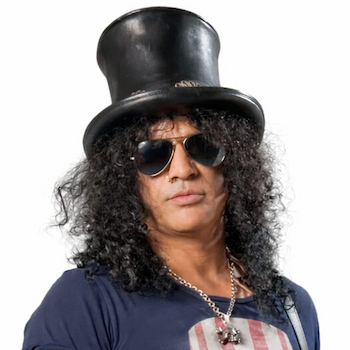
The Slash Blueprint: How Saul Hudson Built a Multi-Million Dollar Global Icon
On February 1, 2026, the Crypto.com Arena in Los Angeles went dark. A single, blood-red spotlight cut through the silence, illuminating the silhouette of a top hat and a Gibson Les Paul. As the opening doom-laden riffs of Black Sabbath’s “War Pigs” shook the floor, Slash stood center stage, leading an unlikely supergroup—Post Malone, Duff McKagan, and Chad Smith—in a thunderous tribute to the late Ozzy Osbourne.
This wasn’t just a “In Memoriam” performance; it was a viral masterclass in brand longevity. While many of his 1980s peers have faded into the “nostalgia act” circuit, Slash remains a primary architect of the modern creator economy. By bridging the gap between old-school rock royalty and Gen Z icons like Yungblud and Post Malone, he has turned his image into a global, cross-generational symbol of cool.
1. The Power of Visual Branding: The “Slash” Symbol
Before he was a guitar god, he was Saul Hudson, a British-born kid from Hampstead who moved to L.A. at age 11. His nickname “Slash” was given to him by a family friend because he was always in a hurry, but it became the foundation of his billion-dollar personal brand.
The Strategy of the Silhouette
Slash understood early on that in a crowded market, consistency is king. While other guitarists changed their look every album cycle, Slash leaned into a uniform:
-
The Top Hat: Found in a retail store called Retail Slut in 1985, it became his logo.
-
The Hair: A permanent curtain of black curls that adds mystery.
-
The Les Paul: A specific instrument choice that resurrected a then-declining Gibson guitar line.
Original Analysis: By treating his appearance as a static logo, Slash bypassed the “aging rockstar” trope. In 2026, his silhouette is as recognizable as the Nike Swoosh. This “visual anchor” allows him to collaborate with artists as diverse as Michael Jackson, Rihanna, and Post Malone without losing his identity. He isn’t just a player; he is a portable aesthetic that adds instant “rock credibility” to any project.
💡 Reader Takeaway: Branding Your Identity
Identify Your Anchor: Choose one visual or stylistic element that stays consistent across all your platforms.
Own a Niche Tool: Whether it’s a specific software or a vintage camera, become synonymous with the tools you use.
Simplify for Scale: Your brand should be recognizable even if it’s reduced to a black-and-white icon.
2. Navigating the Pivot: From Band Member to Solo CEO
Most musicians crumble when their legendary band splits. When Slash left Guns N’ Roses in 1996, he didn’t just join another group; he diversified his “portfolio.” He launched Slash’s Snakepit, then Velvet Revolver, and eventually his incredibly successful solo career with Myles Kennedy & The Conspirators.
Strategic Diversification
| Period | Project | Strategic Goal |
| 1985–1996 | Guns N’ Roses | Establishing Global Market Dominance |
| 2002–2008 | Velvet Revolver | Proof of Concept (Success without Axl Rose) |
| 2010–Present | Solo / The Conspirators | Full Creative & Financial Autonomy |
| 2024–2026 | S.E.R.P.E.N.T. Festival | Niche Community Building (Blues/Legacy) |
Original Analysis: Slash’s move to solo work wasn’t just about ego; it was about risk management. By building “The Conspirators,” he created a leaner, more efficient touring machine that could play mid-sized venues profitably while waiting for the massive Guns N’ Roses “Not in This Lifetime” reunion. He turned himself into a “Platform Artist”—someone who can plug into different infrastructures (stadiums with GNR, theaters with his solo band) depending on market demand.
3. Cultural Alchemy: Bridging the Generational Gap
The 2026 Grammy tribute to Ozzy Osbourne highlighted Slash’s greatest modern strength: Cross-generational relevance. His recent work with Yungblud and Post Malone isn’t accidental. It’s a deliberate strategy to stay relevant in the streaming era where rock often struggles for oxygen.
Why Gen Z Loves an 80s Icon
-
Authenticity: Slash doesn’t “try” to be young; he provides the authentic rock foundation that modern “genre-less” artists crave.
-
The “Co-Sign”: When Slash plays on a Post Malone track, he validates Posty’s rock ambitions to older fans while introducing himself to 50 million monthly listeners.
-
Technical Authority: His 2026 Africa tour showed he still prioritizes live mastery, a “realness” that resonates in a world of AI-generated music.
💡 Reader Takeaway: The Collaboration Mindset
Reverse Mentorship: Don’t just mentor younger creators; collaborate with them to learn new platform trends (TikTok, streaming).
Transfer Your Authority: Use your established expertise to “bridge” new genres or industries.
Be the “Standard”: Provide a level of quality that makes you the go-to person for your specific skill, regardless of the collaborator’s age.
4. Challenges & Pivots: The Health Crisis of 2001
Slash’s career nearly ended at age 35. After years of substance abuse, he was diagnosed with cardiomyopathy and given weeks to live. He had a defibrillator implanted and was forced to pivot his entire lifestyle.
The Sobriety Shift
His sobriety since 2006 coincided with his most productive financial era.
-
Old Strategy: Chaos-driven creativity, unpredictable touring, high-risk lifestyle.
-
New Strategy: Process-driven longevity, disciplined fitness, and business-first touring.
Original Analysis: Slash’s recovery is the ultimate “Technical Career Depth” move. He realized that his “product” was his ability to play guitar at a high level. By removing the toxins, he stabilized his “supply chain.” His net worth—estimated at $120 million in 2026—is a direct result of this stability, allowing him to handle 100+ date world tours that would have broken him in the 90s.
5. Success Metrics: The “Slash” Economic Impact
As we look at his career in 2026, the numbers tell a story of a musician who outpaced the industry’s decline.
-
Global Record Sales: Over 100 million copies (GNR and solo).
-
Touring Efficiency: The “Not in This Lifetime” tour grossed over $584 million, making it one of the highest-grossing tours in history.
-
IP Ownership: Through clever licensing of his name to Gibson, Marshall, and even horror film production (Slasher Films), he has created multiple passive income streams.
-
Digital Presence: His 2026 collaboration videos with Yungblud and the Ozzy tribute have garnered over 250 million views across platforms in just the first quarter.
Conclusion: The Forward-Looking Legacy
Slash has successfully transitioned from a “guitarist in a band” to a Global Media Entity. As he heads into the latter half of 2026 with a rumored new solo blues album and continued stadium runs with GNR, he remains the gold standard for career longevity in the creator economy. He proved that you don’t have to change your soul to stay relevant; you just have to change your strategy.
The Slash Success Table: Old vs. New
| Feature | The 1987 Strategy | The 2026 Strategy |
| Media | MTV & Radio Interviews | Viral “Moments” & Social Collaborations |
| Income | Physical Album Sales | IP Licensing, Touring & Brand Partnerships |
| Health | “Live Fast, Die Young” | Peak Physical Performance & Longevity |
| Brand | Enigmatic Rock Star | Accessible Global Icon / Mentor |
What’s next for the man in the hat? With his 2026 Africa tour dates selling out in record time, Slash is currently opening up new markets for rock music in regions long ignored by Western promoters. He isn’t just playing the hits; he’s expanding the map.
Would you like me to analyze the business model of his S.E.R.P.E.N.T. Festival or provide a list of his top gear-branding partnerships?
Sources:
-
Rolling Stone: The 2026 Grammy Recap.
-
Loudwire: Slash & Yungblud’s “War Pigs” Performance Analysis.
-
Celebrity Net Worth: Saul Hudson 2026 Financial Report.
-
Billboard: The Global Impact of the 2026 GNR Stadium Tour.
Related Articles:

Leave a Reply