
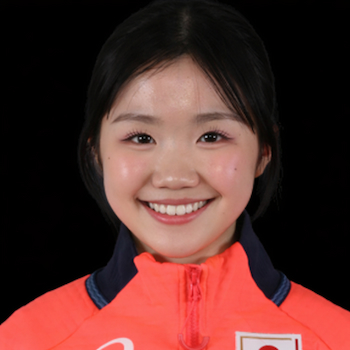
The Ami Nakai Success Blueprint: How the 17-Year-Old “Triple Axel Queen” Conquered the 2026 Olympics
On February 18, 2026, the Milano Ice Skating Arena fell into a hushed silence as a 17-year-old Olympic rookie took her opening pose. Ami Nakai, a skater most casual fans hadn’t heard of six months prior, was about to do the unthinkable. Launching into a soaring triple Axel, she didn’t just land it; she executed it with such clinical precision that she rocketed past three-time World Champion Kaori Sakamoto to lead the Olympic Short Program.
That moment wasn’t just a “lucky break.” It was the culmination of a high-stakes strategy that saw Nakai transition from a promising junior to a global senior powerhouse in a single season. While American star Alysa Liu eventually took gold, Nakai’s bronze medal—and her fearless pursuit of technical perfection—has redefined the blueprint for success in the creator-heavy, high-pressure world of modern figure skating.
1. The “Mao Mentality”: Anchoring Success in Influence
Ami Nakai didn’t just start skating; she started a mission. Born in Niigata in 2008, her career began with a specific spark: watching footage of the legendary Mao Asada at the Vancouver 2010 Games.
Unlike many skaters who find their style through trial and error, Nakai reverse-engineered her career based on Asada’s technical dominance. By her fifth year of elementary school, she was already landing the triple Axel—the most difficult jump in a woman’s repertoire.
Original Analysis: Nakai’s strategy was “Niche Authority.” By mastering the triple Axel early, she branded herself as the technical heir to a legend before she even entered the international stage. This created an immediate “hook” for judges and media alike.
Reader Takeaway: The Influence Blueprint
Identify a Gold Standard: Don’t just practice; study the “titans” in your field to understand the technical ceiling.
Master a High-Value Skill: Like the triple Axel, find the “hardest” part of your industry and make it your signature.
Build a Narrative: Use your inspirations to tell a story that connects your past to your future goals.
2. The Junior-to-Senior Pivot: Managing the “Growth Gap”
Many “prodigies” disappear when they hit the senior circuit. Nakai’s success stems from her ability to manage the growth gap—the period where physical changes and increased competition often derail careers.
In the 2023-24 season, Nakai faced a devastating back injury. She missed the Youth Olympics and fell to 10th at the Japan Junior Championships. Instead of pushing through with more jumps, she and her coach, Kensuke Nakaniwa, pivoted. They shifted focus from “more reps” to “better conditioning” and “self-analysis.”
2023 Strategy: High-volume training, resulting in injury.
2025 Strategy: Quality over quantity; using video analysis to protect her back while maintaining jump height.
The Result: She debuted as a senior in 2025 and won the Grand Prix de France immediately.
Reader Takeaway: The Resilience Pivot
Audit Your Failures: Nakai used her 10th-place finish to re-evaluate her training load. When you fail, don’t just “try harder”; try differently.
Prioritize Longevity: Skill is useless if you’re too injured to perform. Invest in “maintenance” tasks.
Adapt the Intensity: Recognize when your “grind” is becoming counterproductive.
3. The Power of “Mental Training”: Conquering the Olympic Demon
One of the most human stories of the 2026 Games was the text message Nakai received from Kaori Sakamoto. Sakamoto, the veteran leader of the Japanese team, sent Nakai a “packing list” of everything she’d need in Milan—from snacks to recovery tools—so Nakai could focus 100% on skating.
Nakai’s response was a masterclass in psychological preparation. She spent her downtime reading biographies of other athletes to learn how they battled “inner demons.” By the time she stepped onto the ice for the free skate to “What a Wonderful World,” she claimed she felt “zero nerves.”
Insight: This “Community Knowledge” strategy allowed Nakai to skip the rookie learning curve. By leveraging Sakamoto’s experience, she avoided the logistical stress that usually breaks first-time Olympians.
Reader Takeaway: The Knowledge Bridge
Seek Mentorship: Don’t be afraid to ask veterans for their “survival guides.”
Mental Consumption: Fill your mind with success stories during high-stress periods to normalize the pressure.
Simplify Your Logistics: Remove small daily stressors so your energy is reserved for your “Triple Axel” moments.
4. Challenges & Pivots: Beyond the Bronze
Nakai’s road wasn’t just a straight line to the podium. In the Olympic Free Skate, she struggled. She slipped to 9th in that segment after under-rotating later jumps. Many skaters would have spiraled, but Nakai “skated through without faltering.”
She realized her triple Axel technique relied on “quick muscles” and a specific “skid” technique that changed as she grew. Her ability to self-correct in real-time is what kept her in the bronze medal position.
Ami Nakai Key Stats (2025-2026 Season):
Olympic Bronze Medalist (Milano Cortina 2026)
Grand Prix Final Silver Medalist (Nagoya, 2025)
Short Program Personal Best: 78.71 (Olympic Games)
Success Rate: Landed 4 positive-GOE Triple Axels in 4 major international events.
5. Success Blueprint: Comparing the Old vs. New Strategy
| Feature | The Old “Junior” Way | The New “Senior” Blueprint |
| Training Focus | High-volume jumping | Biomechanical efficiency & rest |
| Mental Game | Pushing through pain | Self-analysis & mental training |
| Competitive Edge | Relying on youth/energy | Leveraging veteran mentorship |
| Recovery | Minimal / “Tough it out” | Professional conditioning & rest days |
Conclusion: The Future of “Nakai-ism”
Ami Nakai’s bronze at the 2026 Olympics wasn’t the end of a journey; it was a proof of concept. At just 17, she has already set her sights on the 2030 Winter Olympics in the French Alps. She has proven that success in high-stakes environments isn’t just about talent—it’s about a disciplined, analytical approach to one’s own craft.
By combining the technical daring of the “Quad Era” with the emotional maturity and physical sustainability of a veteran, Nakai has created a new standard for the next generation of Japanese skaters. She didn’t just win a medal; she won the respect of an industry that often discards young talent too quickly.
Sources List:
International Skating Union (ISU) Official Biographies – Ami Nakai
Olympics.com: Milano Cortina 2026 Figure Skating Results
The Japan Times: “Kaori Sakamoto and Ami Nakai Lead Japan’s Historic Night”
Inside Skating: “A Star is Born – The Rise of Ami Nakai”

Leave a Reply