
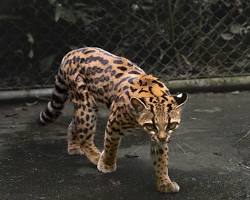
The Tiny Spotted Cat That Rewrote the Rules of Science
For more than a century, no one had discovered a brand-new species of living cat. Then a kitten showed up on a dirt road in Bolivia — and quietly changed everything.
Meet Leopardus tilcayo, better known as the tilcayo tiger cat. It’s the first new cat species discovered in over 100 years, and its story is as much about patience and curiosity as it is about genetics.
A “Weird Cat” Nobody Could Explain
In 2016, a man in Bolivia found a spotted kitten near a forest and took it home, assuming it was just an unusual house cat. About a year later, once it was clear the animal was wild, he handed it over to the Senda Verde Wildlife Sanctuary in the Yungas region — Bolivia’s lush, cloud-draped forest where the Andes mountains meet the Amazon basin.
That’s when biologist Paola Nogales-Ascarrunz got the call. A local sanctuary told her they had received what they called simply “a weird cat,” and she went to see it for herself.
She was hooked immediately. The animal had a small, scrunched-up face, rounded ears, and long whiskers — too small to be a housecat, but covered in leopard-like rosettes she didn’t quite recognize.
At first, she assumed it was a tigrina, also called an oncilla or little spotted cat — a species that had been on the books since 1775. Case closed, or so she thought.
The Detail That Didn’t Add Up
Three years later, while putting together a guidebook on Bolivia’s wild cats, Nogales-Ascarrunz compared her photos to reference images from neighboring Brazil. Something was off. The rosettes on her mystery cat were noticeably larger than they should have been.
It was a small detail. But small details are exactly what taxonomy is built on.
She didn’t have the tools yet to prove her hunch. So she spent years building her skills in genetic analysis, eventually teaming up with geneticist Eduardo Eizirik in Brazil and researcher Jonas Lescroart in Belgium to dig into the cat’s DNA.
What they found didn’t just confirm her suspicion — it blew it wide open.
Cracking the Genetic Code
The team compared complete genomes from 38 cats across the Leopardus genus. The tilcayo cat wasn’t just a slightly different tigrina. It had split off from its relatives roughly 1.4 million years ago — an evolutionary gap similar to the one separating modern lions from extinct cave lions.
That’s not a subspecies. That’s a whole new branch on the cat family tree.
The researchers named the animal Leopardus tilcayo, borrowing the name local communities had used for generations — even though nobody could say exactly where the word came from. Their findings were published this month in the journal Current Biology, and they didn’t stop at one new species. The same study reorganized the entire tiger cat group, confirming five distinct species where scientists once assumed there was only one or two.
What Does the Tilcayo Tiger Cat Look Like?
So what exactly did Nogales-Ascarrunz find? A few quick facts:
- Size: About 18 inches long and roughly 3 pounds — smaller than the average house cat
- Appearance: Light brown fur covered in irregular, leopard-style rosettes
- Features: A small face, short rounded ears, and long whiskers
- Habitat: The Yungas cloud forest, a humid, mountainous stretch of the Andes-Amazon region
- Known population: Just one confirmed individual, the same male rescued as a kitten, now living at Senda Verde
That last point is worth sitting with. An entire species, formally recognized by science, and researchers have only ever laid eyes on one of them in the flesh.
Why a Century Without a New Cat Species?
It’s not that new cats haven’t been hiding out there. It’s that finding them has always been incredibly hard.
Small wild cats are secretive by nature. They’re active at night, they avoid people, and they often look nearly identical to their relatives. One museum specimen used in this very study had actually been mislabeled for years as a completely different cat, a margay, until researchers noticed a telltale detail in the direction of its nape hairs.
Genomic analysis changed the game. Instead of relying only on measurements and photographs, scientists can now read a species’ evolutionary history written directly into its DNA — and that’s allowing them to spot differences no naked eye could ever catch.
More Than a Name: Why This Discovery Matters
This isn’t just a win for taxonomy nerds. It has real consequences for conservation.
When a wide-ranging species gets split into several distinct ones, each new species automatically has a smaller population and a smaller range than before. That can flip its conservation status overnight, from “stable” to “urgent.”
Tiger cats across South America already face shrinking habitat from farming and development. Researchers involved in the study warned that every one of these newly separated species now lives somewhere its forest habitat is disappearing quickly. Splitting one species into five doesn’t multiply the number of animals in the wild — it just means scientists finally understand how few of each kind may actually be left.
That reframing could shape conservation funding and protection efforts across the region for years to come.
A Bigger Discovery Than It First Appears
The tilcayo cat may be the headline, but it’s not the whole story. The same research also uncovered evidence of a new tiger cat subspecies in Peru and raised the possibility that another lookalike cat, the margay, might actually be four separate species rather than one.
Outside experts say this is likely just the beginning. Small wild cats in Africa and Asia have never been studied with this level of genetic detail — and nobody knows yet what else might be hiding in plain sight.
The Human Story Behind the Science
What makes this discovery so compelling isn’t just the DNA. It’s the decade of quiet persistence behind it — a scientist who noticed something didn’t look quite right, and refused to let it go.
Nogales-Ascarrunz hopes the moment reminds people how much of the natural world remains unmapped, even now. Cats are among the most studied, most photographed animals on Earth, and one still managed to go unnoticed for a century.
Her message, in the end, was less about taxonomy and more about a challenge to keep looking: “So let’s go out and find them and protect them.”
Sources
- ABC News — First new feline species in 100 years discovered in Bolivian forest
- National Geographic — Meet the First New Cat Species Discovered in 100 Years
- NBC News — New wild cat species is identified for first time in 100 years, researchers say
- Al Jazeera — New tiger cat species identified in Bolivia, first in over a century
- The Washington Post — New cat species discovered in Bolivia for first time in over 100 years
- Discover Wildlife — New species of wild cat discovered in Bolivia’s cloud forest
- WPRI — Cat species, Leopardus tilcayo, discovered in Bolivia
- Study: Lescroart, J. et al., Current Biology (published September 17, 2026)


Leave a Reply