
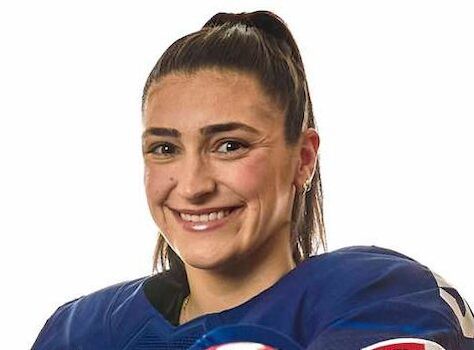
The Megan Keller Success Blueprint: How a Defensive Anchor Rewrote the Playbook for Modern Hockey
The clock in Milan read 04:31 in sudden-death overtime. For the seventh time in history, the Olympic gold medal hung in the balance between the United States and Canada. Megan Keller, the 5’11” defensive powerhouse from Michigan, didn’t just wait for the play to come to her; she seized the moment. Receiving a cross-ice pass from Taylor Heise, Keller executed a “PhD-level” deke past a Canadian defender before burying a backhander into the net. This “Golden Goal” didn’t just secure the 2026 Olympic gold—it solidified Keller’s status as the definitive architect of the modern “Unit of Five” strategy.
For aspiring athletes and media analysts, Keller’s career is more than a list of accolades. It is a masterclass in positional evolution and personal branding in the rapidly expanding Creator Economy of professional sports.
1. The Multi-Sport Foundation: Building Elite Athleticism
Before she was an Olympic hero, Megan Keller was a standout shortstop and a hockey player who refused to take figure skating lessons unless she was in full hockey gear. Born in Farmington Hills, Michigan, Keller’s upbringing was rooted in high-level competition.
Her path provides a vital lesson for modern creators: Diversification breeds specialization. By playing boys’ baseball and achieving All-State honors in softball, Keller developed the hand-eye coordination and spatial awareness that now define her “filthy” stickwork on the ice.
Analysis: The Generalist Advantage
In an era where many young athletes specialize too early, Keller’s multi-sport background gave her a “physical literacy” that most single-sport athletes lack. This move shifted her brand from just a “hockey player” to a “pure athlete,” allowing her to adapt to the increasingly fast and physical PWHL style.
Reader Takeaway: Building Your Base
Master Cross-Training: Use skills from unrelated fields to enhance your primary craft.
Embrace Resistance: Like Keller insisting on hockey gear for figure skating, lean into your unique interests even when they don’t “fit” the traditional mold.
Seek High-Level Competition: Play where the bar is highest to accelerate your growth.
2. The Boston College Era: Redefining the “D-Man”
At Boston College, Keller didn’t just play defense; she revolutionized it. She graduated in 2019 as the program’s all-time leader in defenseman scoring with 158 career points.
Strategic Pivot: From “Stopper” to “Scorer”
Traditionally, a defender’s job was to “shut down” the opposition. Keller pivoted this role. She became a “fourth forward,” leading the nation in defenseman scoring for three separate seasons. This wasn’t just about scoring; it was about Efficiency of Transition. By becoming a scoring threat, she forced opposing teams to change their entire defensive structure to account for her presence on the blue line.
-
Milestone: Three-time First Team All-American.
-
Impact: First defenseman to ever win the Cammi Granato Award twice.
-
Growth Tactic: Leveraging a high +177 rating to prove that offensive output doesn’t have to come at the expense of defensive responsibility.
3. Challenges & Pivots: The PWHPA and the Long Game
The path to the PWHL (Professional Women’s Hockey League) wasn’t a straight line. After graduating in 2019, Keller faced a professional landscape in flux. Instead of settling for an unstable league, she joined the PWHPA, opting for a “wait-and-see” strategy that prioritized the long-term health of the sport over immediate, low-value contracts.
Humanizing the Struggle
This period required immense mental fortitude. For four years, Keller played in “showcase” games while training as an elite athlete without a traditional league structure.
Insight: This move was a “Brand Preservation” play. By refusing to play in sub-par conditions, Keller and her peers signaled to the market that their talent was a premium product. This collective action directly led to the formation of the PWHL and its robust Collective Bargaining Agreement (CBA).
Reader Takeaway: The Power of “No”
Value Your Talent: Don’t settle for “exposure” if it devalues your long-term brand.
Collective Action: Significant industry shifts (like the PWHL) happen when top-tier talent moves as a unit.
Stay Ready: Keller used the “gap years” to refine her mobility, ensuring she was the top pick when the league finally launched.
4. The “Unit of Five” Philosophy: Modern Leadership
Now the Captain of the Boston Fleet, Keller champions a style of play where positions are fluid. “In today’s game, there’s not really any positions anymore,” Keller has noted. This philosophy is the “Success Blueprint” for the 2020s.
Leadership Analysis
Keller’s leadership isn’t about being the loudest person in the room. It’s about Actionable Influence. By being a “bigger person” who is also a “good skater,” she leads by example in the gym and on the ice.
-
The Strategy: Activating all five players on the ice to create 3-on-2 or 2-on-1 advantages.
-
The Result: Keller ranked 2nd in the PWHL in hits (49) during the 2024-25 season, proving she hasn’t lost the physical “edge” while chasing offensive stats.
5. The 2026 Milan Breakthrough: The “Golden Goal” Moment
The 2026 Winter Olympics served as the ultimate validation of Keller’s career trajectory. Throughout the tournament, she was a statistical anomaly:
-
Games Played: 7
-
Goals: 3 (including the Overtime Winner in the Gold Medal Game)
-
Assists: 6
-
Plus/Minus: +9
Original Analysis: The “Overtime Specialist”
In the 3-on-3 overtime format, space is at a premium. Keller’s ability to “read the physicist” (as analysts noted of her move past Claire Thompson) is a result of a decade spent analyzing gaps in the neutral zone. This goal was the culmination of her Data-Driven IQ and Clutch Gene.
Reader Takeaway: Mastering the “Overtime” of Your Career
Identify High-Leverage Moments: Recognize when a single “move” can define your legacy.
Train for the Outliers: The 3-on-3 format is an outlier; Keller’s success there came from specific training in high-speed decision-making.
Call for the Ball (or Puck): As Heise noted, Keller was “calling for the puck.” Successful leaders demand responsibility when the pressure is highest.
The Keller Success Table: Old vs. New Strategy
| Feature | Old Defensive Model | The “Keller” Blueprint |
| Primary Goal | Stay back and prevent goals. | Drive transition and join the rush. |
| Positioning | Fixed to the blue line. | Fluid “Unit of Five” (Total Hockey). |
| Leadership | Top-down, vocal authority. | “Great Teammate” (Leading by example). |
| Career Path | Take whatever contract is offered. | Strategic holdouts to build long-term value. |
| Media Brand | Focused solely on the “game.” | Community leader (hosting girls’ hockey camps). |
Conclusion: A Legacy in Motion
Megan Keller’s journey from a three-year-old in Farmington Hills to an Olympic “Golden Goal” scorer is a testament to the power of evolution. She didn’t just enter a sport; she helped build the infrastructure that allowed it to become a professional reality.
As we look toward the 2027-28 PWHL seasons—where Keller has already signed a two-year extension with the Boston Fleet—her impact will be measured not just in medals, but in the generation of young defenders who no longer feel “stuck” at the blue line. She has proven that being a “defensive” player is no longer about staying back; it’s about leading the way.
Sources:
- *PWHL Official Stats (2024-2026)
-
USA Hockey National Team Profiles
-
Boston College Athletics Archive
-
Time Magazine: Olympic Analysis (Feb 2026)
Related Articles:

Leave a Reply