
Beyond the Canvas: The Joni Mitchell Success Blueprint for the Modern Creator
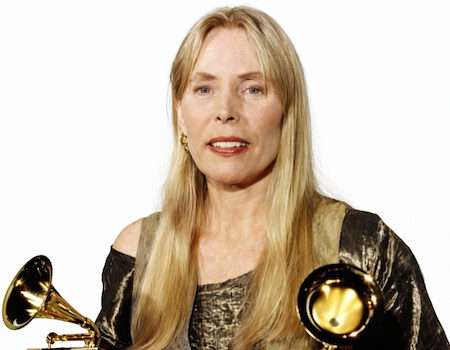
At the 2024 Grammy Awards, a hush fell over the Crypto.com Arena that had nothing to do with the scripted telecast. Joni Mitchell, at age 80, sat on a regal throne, white hair flowing, clutching a cane like a scepter. As she began the opening notes of “Both Sides Now,” the room—filled with the industry’s most powerful icons—dissolved into tears. This wasn’t just a nostalgic performance; it was a masterclass in the “Long Game.”
In an era of viral 15-second clips, Joni Mitchell is the ultimate “Original Creator” who prioritized brand equity over short-term metrics. Her career isn’t just a series of hit Joni Mitchell songs; it is a blueprint for radical authenticity and pivot-strategy. From surviving polio as a child to reclaiming her voice after a catastrophic brain aneurysm in 2015, Joni’s journey offers a high-value manual for anyone looking to build a legacy that outlasts the algorithm.
1. The Power of the Pivot: Why “Blue” Was Just the Beginning
When fans think of Joni, they often start with Joni Mitchell – Blue (1971). It is frequently cited as the greatest album of all time by a female artist. But for Joni, Blue was a risk that almost broke her. She described herself as having “no secrets” during that era, feeling like a “cellophane wrapper on a pack of cigarettes.”
The Success Strategy: Instead of duplicating the folk-confessional style that made her a star, she pivoted. She moved into jazz-fusion with Court and Spark and The Hissing of Summer Lawns. Critics were confused; the industry was terrified. However, this move shifted her brand from “Folk Singer” to “Musical Architect.”
-
Original Analysis: Mitchell understood that being “pigeonholed” is the death of a long-term creator. By alienating her initial base to pursue jazz, she ensured her catalog would never sound “dated.” She traded immediate Top 40 comfort for a “Lifetime Achievement” trajectory.
Reader Takeaway: Mastering the Pivot
Audit Your “Comfort Zone”: If you are doing what worked three years ago, you are stagnating. Identify one “experimental” project to launch this quarter.
Prioritize Artistic Growth over “Likes”: Joni ignored the charts to explore jazz; your brand needs a “prestige” pillar that isn’t dependent on viral trends.
Own Your Evolution: Don’t apologize for changing your style. Use your “pivots” as a narrative hook to keep your audience curious.
2. Technical Innovation: The “Joni Tuning” Solution
Many ask: How did Joni Mitchell get that sound? The answer lies in her physical limitations. After contracting polio at age 9, her left hand was weakened. She couldn’t play standard guitar chords.
Instead of quitting, she invented her own musical language—Open Tunings. She created over 50 unique guitar tunings to make the instrument work for her.
-
Original Analysis: This is the “Product-Market Fit” of the soul. Joni didn’t try to fit into the existing musical infrastructure; she rebuilt the infrastructure to accommodate her specific constraints. In the modern creator economy, this is equivalent to developing a proprietary software or a unique editing style that others cannot easily replicate.
3. The “Unwillingness to Cooperate”: Protecting the Intellectual Property
One of the most famous Joni Mitchell quotes involves her critique of the music industry: “I believe a total unwillingness to cooperate is what is necessary to be an artist.” Joni has famously feuded with executives and even voiced skepticism about modern stars. When asked what Joni Mitchell said about Taylor Swift, she was candid, once noting she hadn’t heard the music but observed the physical similarities for a potential biopic. This “aloofness” isn’t just personality; it’s a business strategy.
-
The Blueprint: Joni maintained control over her masters and her publishing in an era when most women were being exploited. By being “difficult,” she insured her Joni Mitchell net worth (estimated at $155 million in 2025) and her creative freedom.
Reader Takeaway: Protecting Your Equity
Read the Fine Print: Never trade long-term ownership for short-term “clout” or advances.
Cultivate “Strategic Dissent”: It is okay to say no to partnerships that dilute your brand voice, even if they are lucrative.
Build a “Frictionless” Portfolio: Diversity your income (Joni is also a world-class painter) so no single platform or “boss” can shut you down.
4. Challenges & Pivots: The Long Road Back from 2015
The most significant “Challenge & Pivot” in Joni’s career happened off-stage. In 2015, she suffered a brain aneurysm that left her unable to walk, talk, or sing. The industry assumed she was finished.
What followed was the “Joni Jams.” She invited musicians like Brandi Carlile and Elton John to her home to play. She didn’t “practice” in the traditional sense; she immersed herself in the community.
-
Original Analysis: Her 2022 return at the Newport Folk Festival and her 2024 Hollywood Bowl concert were “community-led” successes. She didn’t need a marketing machine; she had a community that held the space for her until she was ready to fill it.
5. The “Both Sides Now” Narrative: Humanizing the Mystery
For decades, a central mystery of Joni’s life was her “lost” daughter. At 20, Joni gave up her daughter, Kilauren Gibb, for adoption because she was broke and the “scandal” of being an unwed mother in 1965 Canada was overwhelming.
Did Joni Mitchell ever meet her daughter? Yes. They reunited in 1997. Joni’s song “Little Green” was actually a secret message to her daughter, written years before the public knew the truth.
-
Original Analysis: Joni used her private pain as a primary source for her “content.” However, she did it with “Subtle Vulnerability.” She didn’t “overshare” in real-time; she processed the trauma into art, then revealed the context only when she was ready.
Reader Takeaway: Sustainable Vulnerability
Art Over “Tea”: Turn your personal challenges into universal themes. Don’t just “vent”; create something that helps others process their own versions of that pain.
Timing is Strategy: You don’t owe the audience your “trauma” in real-time. Wait until you have the perspective to lead the conversation.
Reclaim the Narrative: When a secret (like Joni’s daughter) became public, she didn’t hide. She leaned into the reunion, making it a story of healing.
6. Historical Context: Woodstock and the “FOMO” Strategy
One of the great ironies of music history is that Joni Mitchell wrote the definitive anthem for the era—“Woodstock”—without actually being there. Her manager, David Geffen, advised her to skip the festival to appear on The Dick Cavett Show.
How old was Joni Mitchell at Woodstock? She was 25, watching the festival on a TV screen in a hotel room.
-
Original Analysis: By not being there, she was able to capture the “myth” of the event rather than the “mud” of the reality. This is a classic “Observer Strategy.” Sometimes, to lead a movement, you have to stand slightly outside of it.
7. The John Lennon Encounter: Ignoring the “Experts”
What did John Lennon say to Joni Mitchell? Legend has it that upon hearing her complex, poetic tracks, Lennon told her, “It’s all a product of over-education. You want a hit, don’t you? Put some fiddles on it!”
Joni’s response was to keep doing exactly what she was doing. She knew that Lennon’s “formula” worked for the Beatles, but it wouldn’t work for a “Joni Mitchell” brand.
-
Success Blueprint: Distinguish between “Advice” and “Projection.” Most experts will tell you to follow the current trend (the “fiddles”). Real growth comes from doubling down on your “over-education” or whatever makes you “weird.”
8. Analyzing the “Joni Mitchell – Help Me” Era
By the mid-70s, Joni was a superstar. “Help Me” was her biggest hit, but she used that leverage to demand absolute control over her recording process. She became her own producer in all but name.
-
Milestone: Court and Spark (1974) reached #2 on the Billboard 200.
-
Tactical Insight: She used the “One for Them, One for Me” strategy. She gave the label a hit (“Help Me”) so she could have the budget to record the experimental The Hissing of Summer Lawns.
9. Joni Mitchell in 2026: The Future of the Icon
As we look at the creator landscape in 2026, Joni Mitchell remains the gold standard for “Legacy Creators.” Her return to the stage hasn’t just been a “greatest hits” tour; it’s a social movement.
-
Forward-Looking Summary: Joni is currently working on archival projects that give fans a “Behind the Scenes” look at her process. In the age of AI-generated music, Joni’s “Open Tunings” and human imperfections are her greatest assets. She is teaching a new generation that authenticity is the only thing that cannot be automated.
Success Table: The Mitchell Method
| Strategy Element | The Old “Standard” Way | The Joni Mitchell Way |
| Branding | Consistency (Stay in one genre) | Evolution (Pivot every 3 years) |
| Vulnerability | Oversharing for “clout” | Subtle Vulnerability (Art first) |
| Collaboration | Only with “A-Listers” | The “Joni Jam” (Mentorship & Community) |
| IP Management | Sign away rights for a check | Absolute Ownership (Protect the vision) |
| Technical Skill | Follow the “Correct” way | Constraint-Led Innovation (Open Tunings) |
Final Thoughts: Painting with Sound
Joni Mitchell often says she is a “painter derailed by circumstances.” She approaches her songs like canvases, layering “colors” of sound that others find jarring. Her success wasn’t an accident of the 1970s; it was the result of a woman who decided that her “Diagnosis” (polio, Morgellons, aneurysm) would be the catalyst for her “Design.”
Whether you are a musician, a digital creator, or an entrepreneur, the Joni Mitchell blueprint is clear: Don’t wait for the world to give you a seat at the table. Build your own throne, bring your own “fiddles,” and never, ever cooperate with a vision that isn’t your own.
Sources:
-
Rolling Stone: The Genius of Blue
-
Billboard: Joni Mitchell’s Net Worth and Career Milestones
-
The New York Times: The Reunion of Joni Mitchell and Kilauren Gibb
-
Grammy.com: 2024 Performance Analysis
Related Articles:


Leave a Reply